
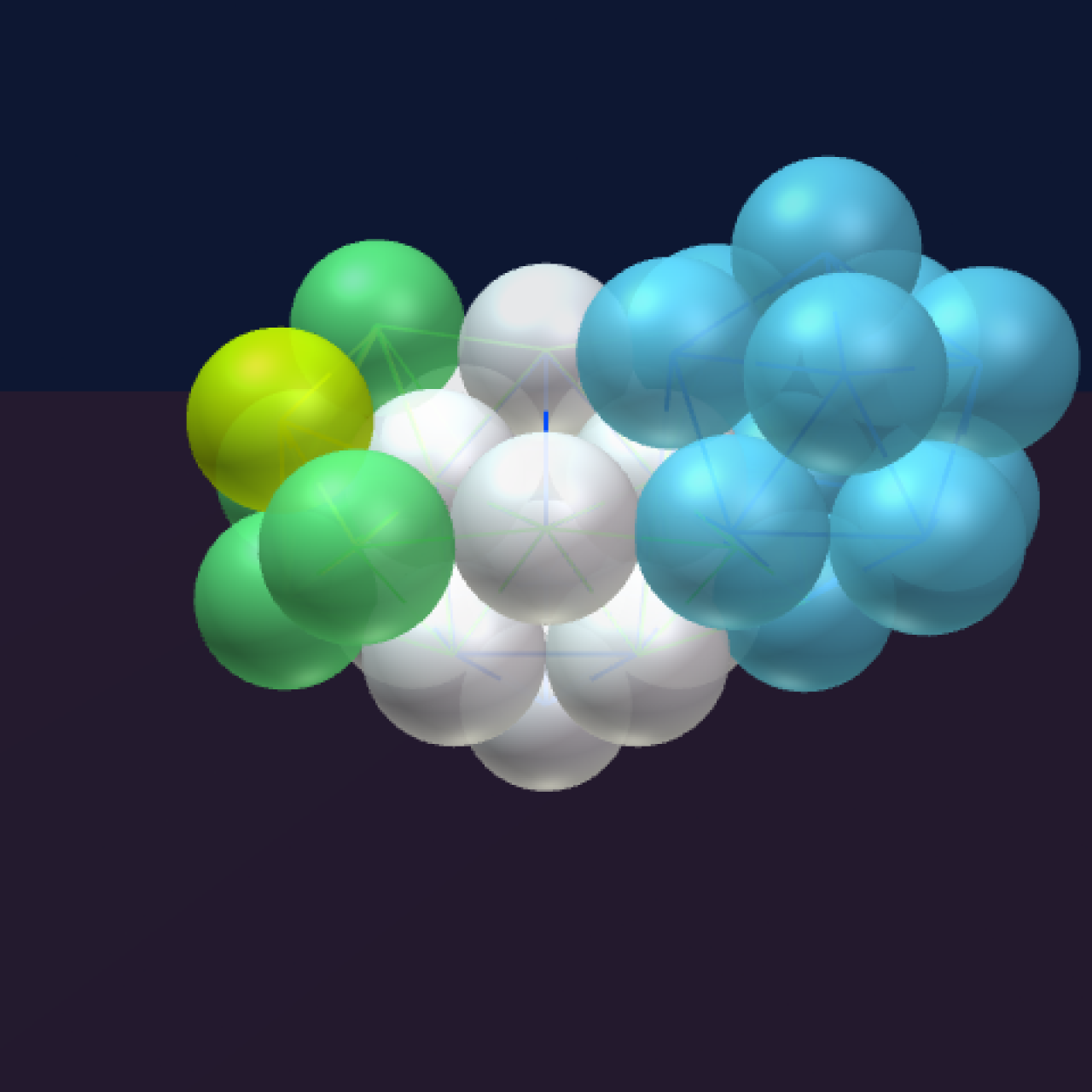
<p>Silicon has an acitve carbon nuclet which results in a valence of +2/+4 and is essentially a Carbon with an extra backbone that has a neutral 5 ending. The half with the 5 ending is as if it were a noble gas, the half that has the Carbon nuclet is as if it were a Carbon. Therefore it falls into the so called Carbon group with similar properties as Carbon. </p>
<p>The Carbon nuclet can hold 2 potential extra 'neutrons' (p+e pair) yielding the Si 29 and Si 30 isotopes that are still stable. <br />
<br />
nb. Silicon has an alternative form, see element "Silicon 28 Alternative". <br />
Which combination of nuclets is dependent on the ratio of protons and neutrons (Deuterium pairs). <br />
In this case of Silicon, it seems that the alternative form is more true. </p>
<p> </p>